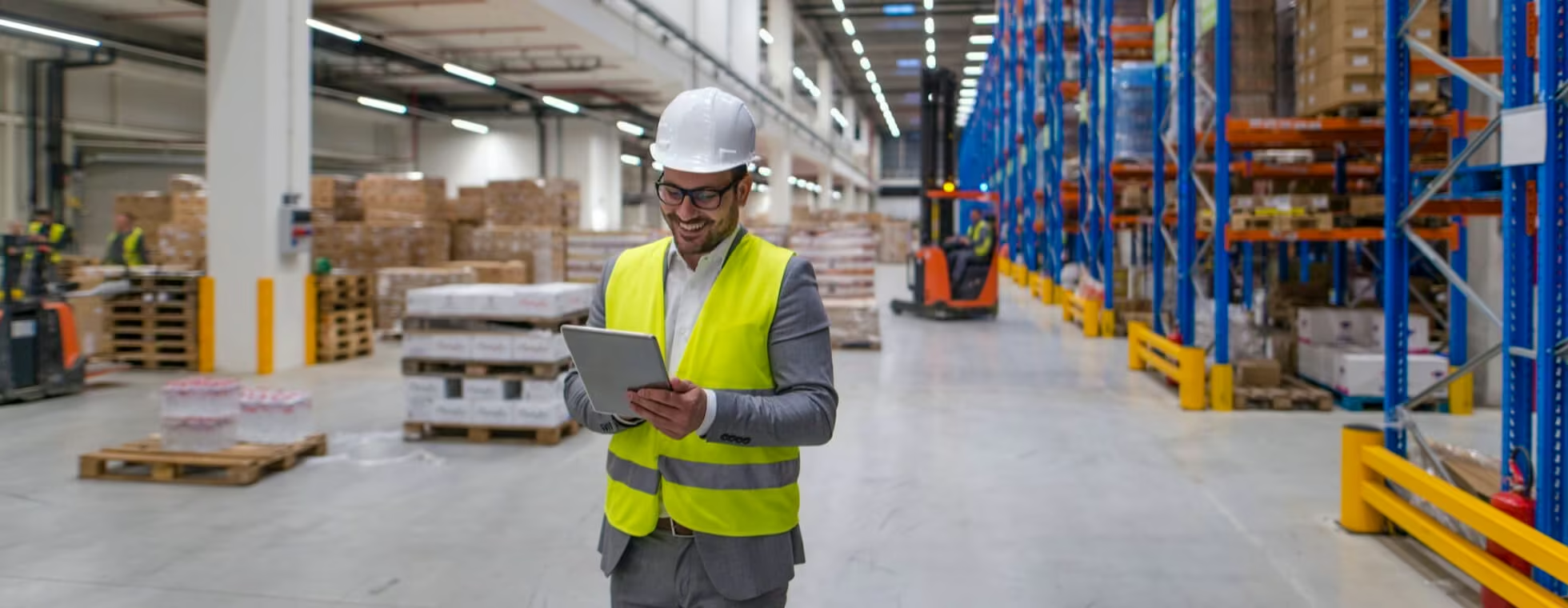
The warehouse of today is a hive of activity, with pallets, forklifts, and workers in constant motion. As the number of connected devices surges—projected to more than double to 36.8 billion Industrial IoT connections by 2026, per Jupiter Research—warehouses stand to gain immensely from combining Internet of Things (IoT) devices with Real-Time Locating Systems (RTLS). This powerful duo delivers real-time insights, driving efficiency, safety, and productivity while unlocking new revenue streams. Below, we explore how IoT and RTLS transform warehouse operations, alongside key considerations for implementation.
How IoT and RTLS Work Together
IoT devices, such as anchors and smart tags, collect and share data on everything from inventory conditions to equipment status. When paired with RTLS, which uses tags, locators, and advanced software to pinpoint the exact location of assets or personnel indoors, the result is a dynamic, real-time view of the warehouse. Tags attached to pallets or workers emit signals to fixed locators, which feed data into software dashboards for instant analytics, actionable insights, and integration with warehouse management systems (WMS).
This combination goes beyond tracking—it monitors conditions like temperature for perishable goods, optimizes workflows, and even supports safety protocols. Here’s how it reshapes warehouse operations.
1. Streamlining Operations for Maximum Efficiency
IoT and RTLS solution together create a seamless flow in warehouse processes. Real-time asset tracking of pallets, bins, and forklifts eliminates hours spent searching for misplaced inventory. For example, finding a specific crate among thousands becomes a quick glance at a dashboard, guiding workers directly to it.
Beyond location, IoT anchors monitor inventory levels, automatically flagging low stock for reordering. This reduces manual checks and paperwork, freeing staff for high-value tasks like order fulfillment. Data-driven insights also reveal inefficiencies, such as congested picking routes, enabling layout tweaks that boost throughput. One warehouse reported a 20% reduction in order processing time after optimizing paths with RTLS data.
2. Enhancing Safety and Compliance
Safety is critical in fast-paced warehouses, where forklifts and workers share tight spaces. IoT-powered RTLS tags on worker vests or equipment can enforce safety protocols, like vibrating to alert workers if they’re too close to a moving vehicle or entering a restricted zone. This minimizes collisions and hazards.
In the context of health crises, such as managing post-pandemic protocols, RTLS tracks worker proximity to ensure social distancing. If a health issue arises, location logs enable precise contact tracing, isolating only those at risk rather than halting the entire operation. This data also serves as an audit trail to demonstrate compliance with safety regulations, reducing liability and downtime.
3. Boosting Productivity and Revenue
By combining IoT’s data collection with RTLS’s UWB precise tracking, warehouses can slash downtime and waste. Real-time alerts direct maintenance crews to equipment needing repairs, pinpointing their location to avoid delays. Managers can also monitor worker efficiency, identifying bottlenecks or underutilized resources to balance workloads.
These efficiencies translate to cost savings and revenue gains. For instance, a distribution center using IoT and RTLS cut maintenance delays by 30%, boosting output without additional labor. Reduced errors in inventory management and faster order fulfillment also enhance customer satisfaction, driving repeat business and profitability.
Conclusion
Combining IoT with RTLS indoor positioning system turns warehouses into smarter, safer, and more profitable hubs. By streamlining operations, enhancing safety, and driving productivity, this technology unlocks new revenue opportunities while navigating the complexities of modern logistics. As the IoT ecosystem grows, warehouses adopting these tools will stay ahead, transforming challenges into competitive advantages.